By Jorgia Burke

Willy Chavarria is no stranger to a spectacle, and his Fall/Winter ‘26 collection was living proof of this very notion. Eterno arrived as a continuation of his ongoing project: not merely staging fashion shows, but constructing environments where clothing, politics, and performance collapse into one another. The sincere meditation which anchored Eterno was one of eternal love—a genre of devotion that traverses generations, holds both beauty and suffering in equal measure, and in its final form, eclipses all else.
A film noir bookended the show, where the eyes—and the ears—feasted, providing a cinematic sensibility that privileged atmosphere over convention. With performers ranging from Santos Bravos, Feid, Lunay and Mon Laferte, whose vocals nursed the show awake. The juggernaut performance packed out 2000 seats in the Dojo de Paris—400 of which went to viewers from Lyas’ watch party, cementing Willy’s mission of inclusion.
In true Chavarria demeanour, odes to Chicano culture were laced throughout the entirety of the co-ed collection, grounding the theatricality in lived identity rather than costume. The show drew from the emotional language of a telenovela landscape, fusing music and fashion into a narrative form that resisted the traditional runway format. “It started out as me wanting to show the clothing in a way that wasn’t models walking around on a runway,” Chavarria said.
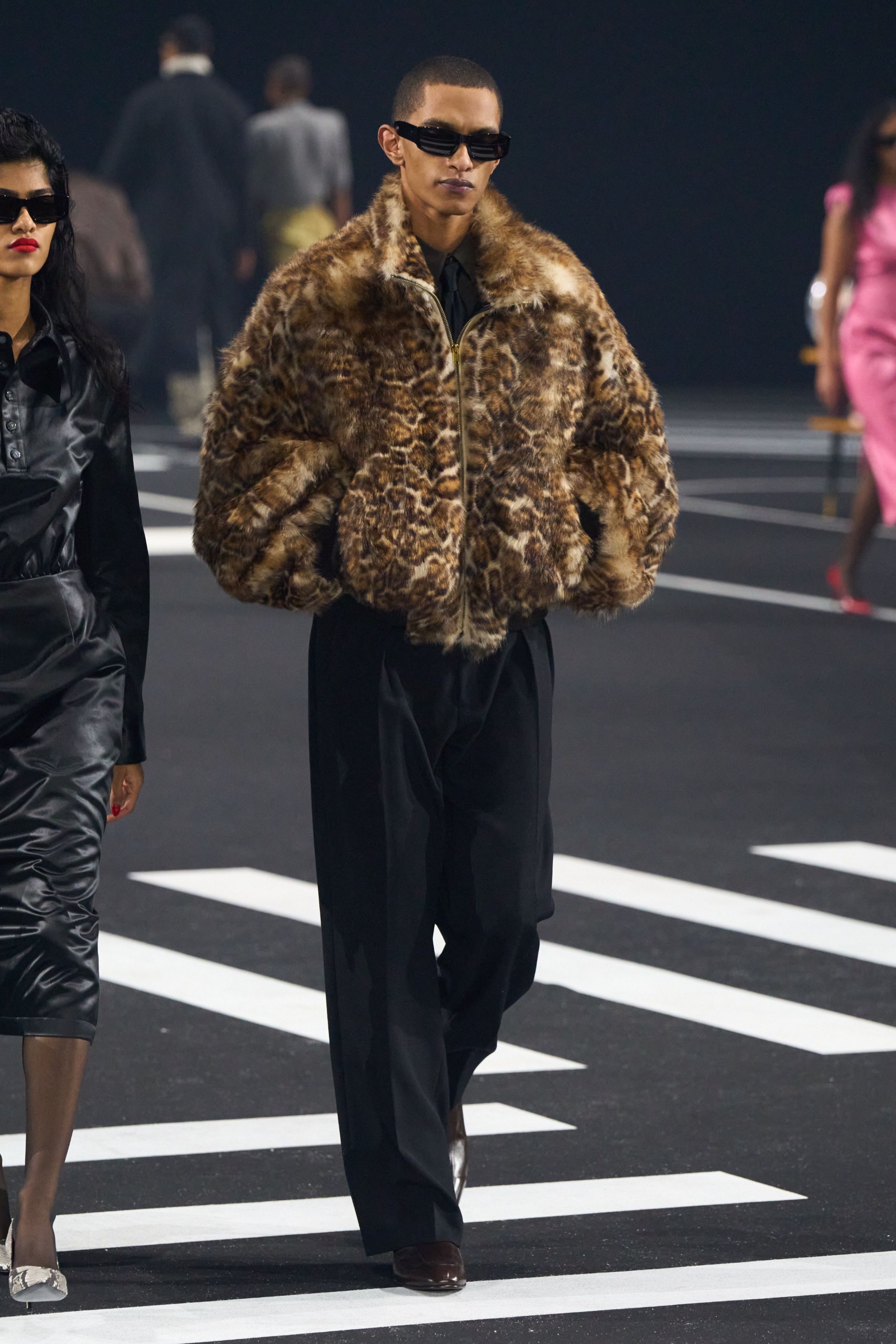
Whilst clothing (to a degree) sat on the periphery of the blockbuster’s central expression, each look never strayed far from Willy’s hallmark touchstones, all walking the line between elegance and resilience. Quintessential Chavarria silhouettes were reimagined through slim tailoring, yet fell back on his notorious accents of exaggerated collars and ‘40s reminiscent zoot suits rendered in a scheme of mint greens, chestnut browns and charcoal hues.
In the same breath, womenswear featured a synthesis of sharply tailored skirt suits, column dresses accentuated by padded shoulders in Chavarria’s recognisable vocabulary of snakeskin, floral and leopard print. A novel sandwich dress leant towards that of a more daring silhouette—with pastel silk interjecting the primary fabric of the dress, allowing it to billow freely with each step.
Streetwear entered with Lil Mr. E and his entourage on lowrider bikes, presenting Chavarria’s signature tracksuits as both cultural markers and grounding devices. Here, Chavarria provided a brief sportswear interlude, where utilitarian detailing punctuated athletic silhouettes—demonstrating Willy’s stylistic breadth to ebb and flow fluidly between streetwear codes and formalities, never neglecting the other.
Amidst moments of unimaginable fracture, there is a collective hunger for hope, fueled by a shared desire for love. Always carving out unexplored ways of collapsing fashion and politics, Willy proves that fashion isn’t always a medium of escaping reality; yet a means of engaging with it directly.

